soupengland.in

Selected work · Conversion and events

The Taster Lecture series

How I turned a high-volume taster lecture programme into a conversion engine: a flat, collaborative way of working that let academics focus on teaching, an organic reach strategy that pulled a wider audience into the funnel, and a format tuned session by session for both registrations and staff wellbeing.

~40
Taster sessions delivered across the year
100+
Registrations per event
33%
Less intro content, reaching core themes faster
4 teams
Faculty, marketing, enrolment and ambassadors aligned
01 · The method

Running it as one project

To drive conversion and engagement at NU London, I led our Taster Lecture series, a project that pulled together academic faculty, marketing, enrolment management and student ambassadors. A traditional linear workflow kept creating bottlenecks across such different stakeholders, so I moved us to a flat approach: one centralised, real-time tracker that every department could update at the same time.

I treat each task like a mini-project, mapping the steps at the start of the cycle so nothing slips, and prioritising strictly by urgency and importance. By consolidating the information up front and setting crystal-clear timelines, every contributor knew exactly what was needed and when. That mattered most for academic staff less familiar with recruitment logistics, who could then focus entirely on teaching rather than organisational hurdles.
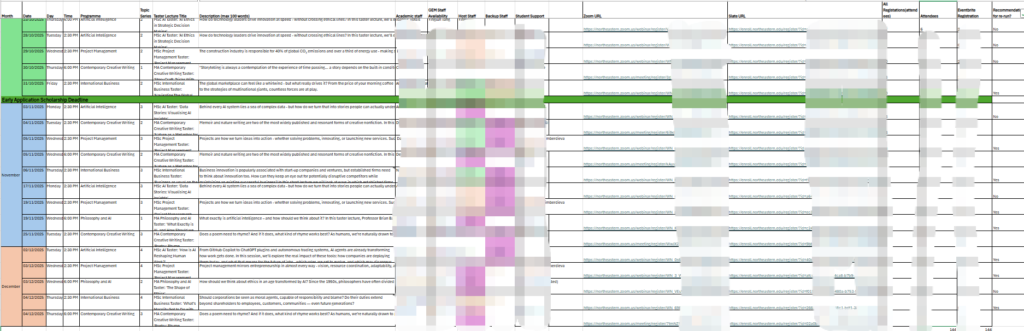
The centralised, real time tracker that kept faculty, marketing, enrolment and ambassadors in sync.
02 · The reach

A bigger funnel on a small budget

With a limited marketing budget, I worked closely with the marketing team to maximise organic reach. We played a deliberate numbers game, pulling interest from a wider geographical area into the recruitment funnel. Using Eventbrite, sharpening visibility with thematic imagery and highly targeted tags, I reviewed the marketing content and secured academic approval so the topic was never misrepresented, while still adding a hook that drove registrations.

The result was consistent: more than 100 registrations per event.

03 · The format

Tuned for registrations and for people

I also audited how we presented. We cut introductory content by about a third to reach the core academic themes faster, and shifted toward faculty-led introductions. To protect staff energy across long recruitment cycles, I moved from a dual-host model to a Main and Backup system. And I brought student ambassadors into the sessions, because peer-to-peer storytelling persuades prospective students far more than any sales pitch.

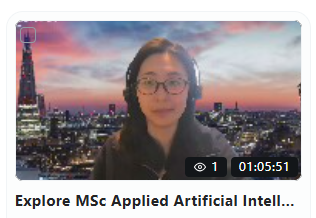
A delivered session: Explore MSc Applied Artificial Intelligence.
04 · What worked

What made the series convert

Across roughly forty sessions, a few choices made the difference between activity and results.

05 · The result

Closing the loop

Over the year we delivered around forty taster sessions. At the end of the cycle I ran a full data analysis, compared performance against previous years, and shared the findings with the wider team.

Working with so many different people taught me to tailor my support to each one, offering more manageable steps where they helped, while drawing everyone into a shared sense that their part needed to be on time and high quality so the whole effort never stalled at any single point. That combination delivered successful events and, just as importantly, left people feeling respected and supported.

Want the detail?

See the rest of the work

Scroll to Top